
hare
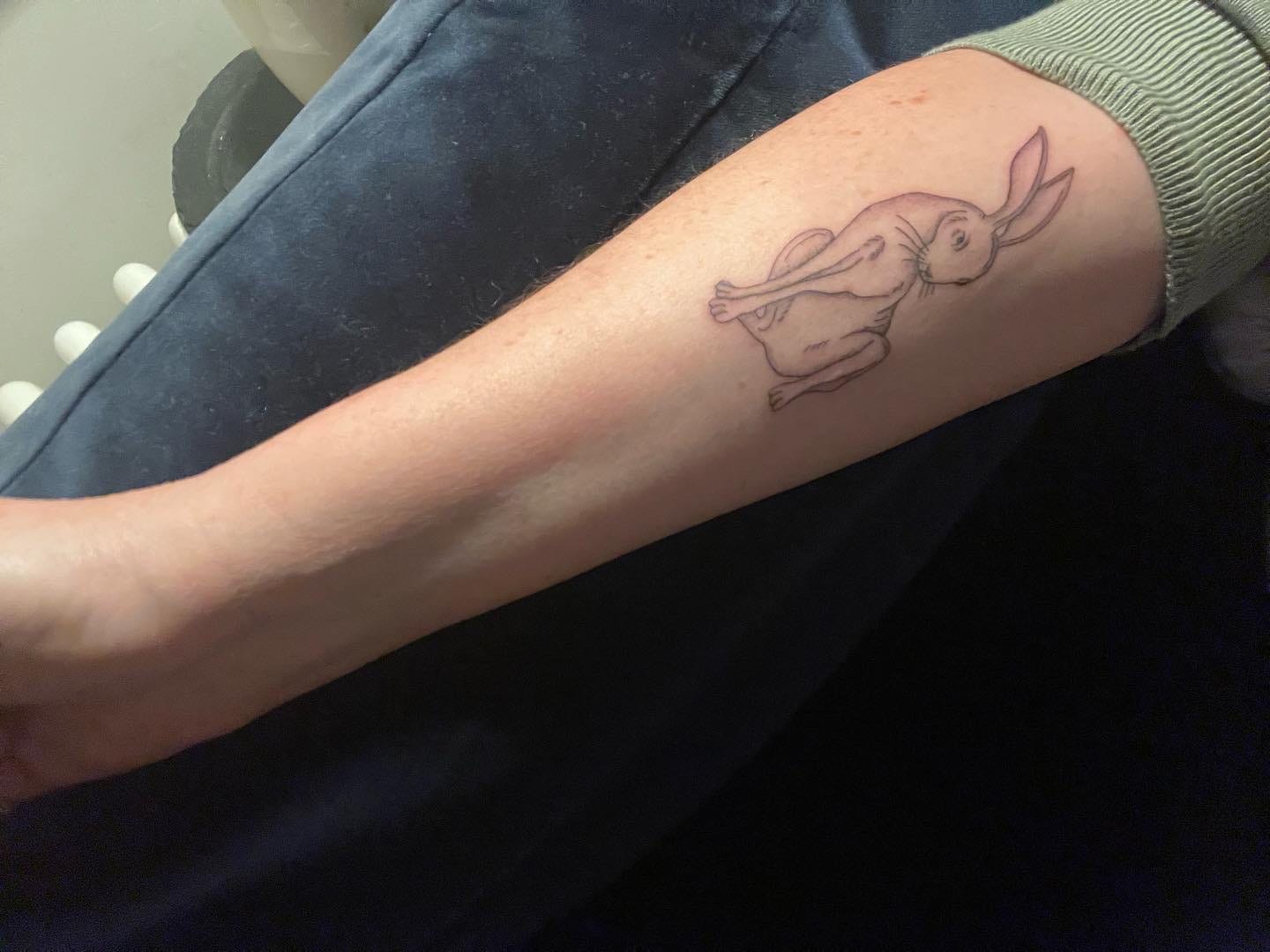
the story behind the tattoo

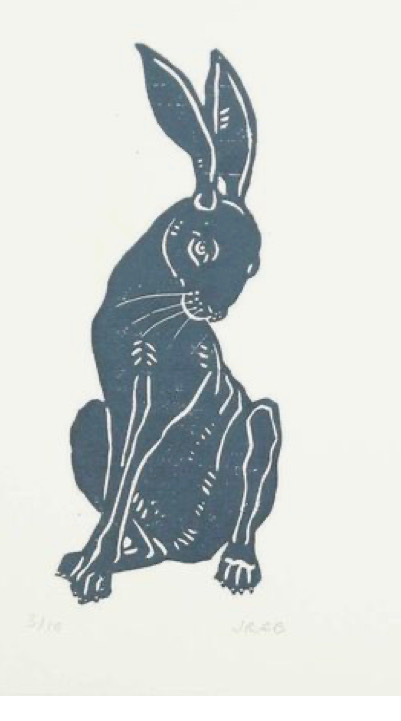
September is madly busy. I’m just back from Greece and unpacking my little suitcase of floaty dresses and linen trousers to fill it back up again with jumpers and jeans. I’m off to Norway to run a writing retreat with my partner in crime (well, life writing), Andy West. So, rather than try and dredge up something new to post on Substack this week, I thought I’d share a very personal story that I write a few years ago. I originally intended for it to be in my book, but it just didn’t belong. Yet I love it as a piece of writing, and as a memory of why I got my first (and so far, only) tattoo in my fifties. I hope you enjoy ‘Hare’.
14th December 2021
I’ll just start and you can tell me how it feels…Ok, ready? I breathe deeply and brace myself for unimaginable pain. I feel a sting. Is that it? Surely it’ll get worse. I spent an hour this morning googling ‘how painful is getting a tattoo?’ and the consensus was ‘very painful indeed’.
How is that? asks Lauren softly. Fine, I reply. Not nearly as bad as I thought it’d be. Ok, great, she says. I’ll carry on. Forty minutes later she’s done with the basic design and asks me if it’s okay. I look down and meet the hare that will be on my inner arm for the rest of my life. I love it, I say.
***
A few months earlier, I’d walked along a dry riverbed. The banks either side rose up menacingly. Trees with spindly, angular branches were silhouetted against a violent sky. As I picked my way through cracked, red-brown mud, small fish flapped feebly around my feet, mouths gaping, their tiny silver-grey bodies stiffening in the midday heat. I bent down to pick one up, biting into it warily, and then ravenously tearing chunks out of it. I popped a few smaller fish into my mouth whole, wrinkling my nose as I crunched on sour flesh and bones. The landscape was post-apocalyptic, and I was in survival mode.
I continued, disorientated, and confused. A malodorous stench thickened the air. Glancing up from the rotting fish and deepening crevices, I saw something in the middle of the path ahead, an unidentifiable shape, matted, slightly bloodied and dirty. As I got close, it twitched. And again. I stood a few feet from it, totally still, trying to control my breathing. I could see it was a brown hare lying flattened on the ground like a clod of earth. As I drew nearer, it moved, timidly at first, and then more purposefully. I watched it slowly coming to life, stretching its long limbs, and yawning languorously as if it had been enjoying a nap, not lying compacted on the dirt track looking for all the world as if it had been squashed on the bars of an SUV.
I stood motionless, holding my breath. The creature was aware of me and was curious. Dragging itself slowly, painfully, onto its hind legs, it stood, sniffing the air in my direction. I was doing my best not to inhale, for the hare was partly responsible for the pervasive odour, reminiscent of a dog that had rolled in fox poo. Its scent mingled in discordant harmony with the smell of rotting fish.
The hare shook himself vigorously and stared at me shyly, but intently. Spraying much of the caked-on mud from his fur, he now looked less like roadkill. He was scruffy but alert, a wild creature, powerful and impetuous. I instinctively knew he was going to leap towards me, so I braced myself and squeezed my eyes shut. Initially afraid he might kill me, my fear quickly subsided. He meant me no harm. I tentatively opened one eye to see him rocking back on his haunches. He made to jump, launching himself through the air in one impressively lithe movement.
Landing heavily against my body, the hare clasped me, pivoting and pressing his weight downwards to rest on my right hip. Wrapping his forepaws tightly around my arms, almost crushing me in his fierce embrace, he quivered with an emotion I couldn’t immediately identify. The vibrating bass of his heartbeat went through me, and I looked directly into his eyes. They were deep russet brown, soft and searching. We held each other’s gaze. I was trembling too, but what passed between us in that moment was a tacit understanding of our mutual vulnerability and trust in one another. The ragged hare was afraid of me, as I was of him, but he needed my strength to revive him. We clung to each other, my face buried in his fur, which now smelled sweet and nutty like a wet labrador. I relaxed as I realised we were making each other better, stronger. I gave the hare life, and the hare gave me life in return.
***
My unconscious encounter with the hare had been unusually vivid and emotionally charged. My therapist is very good on this kind of thing. He told me Native Americans have a concept of ‘big dreams’, believing that all of us have one or two very significant dreams in our lifetimes which carry particular meaning we can act on, that show us how to live. It’s what Jung called an archetype, an ancient symbolic image, pregnant with power, that lives in the deepest levels of the collective unconscious, ready to spring forth into action once the internal redemptive process begins to work.
Jung believed that all of us have a latent connection to mythological histories we’re not knowingly aware of. Centuries of meaning-making in religious and secular cultures around the world can become activated in our unconscious minds. His followers say we should recognise and honour the archetypes that present themselves to us in our big dreams. Well, when you live 40 yards away from a tattoo studio and have spent years admiring the gorgeous shop frontage and film-set displays in their windows, what better way to recognise and honour a cultural archetype than in permanent ink on your body?
I suspect people have been tattooing hares on bits of their anatomy for thousands of years. You’ll already know many of their mythical associations, but I did a bit of research and learned a few that were especially meaningful to me. Hares are a symbol of creation, restoration, and rebirth after death. They are curious, they love to learn and explore. In ancient Egypt, the hieroglyph for ‘to be’ was a hare, starting up, leaping forward, springing to life. The hare is solitary, watchful and melancholic. Powerful yet playful. They have no family life. They don’t like to be trapped. Perhaps most resonant of all, hares are the last creatures to leave their homes when a field is on fire.
I’d started therapy a month before I had my hare dream. I was going over old ground, reliving the feelings of rejection I’d experienced when my partner left me and the sense of humiliation when he returned. My therapist said I’d experienced something apocalyptic, and it was little wonder that my inner landscape was cracked, depleted, dying. He suggested that what I’d been through had played havoc with my instincts. Against that backdrop, my oneiric hare was a gift, a talisman. He described my hare as an unredeemed part of my self that wanted to be united with its opposite. I had to find an inner strength, while accepting that there is strength in vulnerability too. The dream seemed to tell me I had a chance now to shake off the sticky negative feelings that were weighing me down. Like my unrestored house, and my memoir, the hare was a symbol of rejuvenation and potential. I’d been given an opportunity for a new life.
***
Darkness is falling outside the Christmas-lit windows of the tattoo studio. Lauren stands back to look at her handiwork and asks what else I’d like. I suggest a little delicate shading around the creature’s chest and ears to make him look more three-dimensional. She obliges and then asks if I’d like his eyes coloured in. After a few moments thought, I decide he’ll look a little less cute if his irises are inked in so, yes, we should do it – he was, after all a shaggy, smelly, decidedly uncute hare.
Ten minutes later, we’re done. I can’t take my eyes off my new tattoo. This experience is profoundly symbolic for me – symbolic of freedom, of rebellion, of those strange months spent in lockdown, of surviving difficult life experiences, of connection, neighbourhood, and home. It is also an affirmation of the power of the unconscious to heal what troubles us when we take the time to try and understand its alchemic language. Elated, buzzing, I send a photo to Andy. The hare is exactly how he appeared in my dream. He’s scruffy enough to look convincing as near-roadkill and has a very slightly sinister edge. But he also has the all-important sense of vulnerability and pathos.
I thank Lauren and pay up, before crossing the road to number 8. The pale stucco glows in the early evening December gloom. My phone lights up too with a flurry of texts in response – It looks very cool! The design has come out great. Was it flippin painful? I’m worried prisons will be back in lockdown soon.
I swerve at the threshold of my house and backtrack slightly. Climbing the stone steps, I stand before the door of number 6. Before even knocking, I can hear Helen’s footsteps running down the hallway. We’re both laughing excitedly as she opens the door and pulls me inside.
Writing prompt – write a story about why you got your first tattoo and what it is, or what you would choose if you got one. I’d love to read them!
What I’m reading
I’ve just read ‘The Wife’ by Meg Wolitzer (2003). I’ve seen the movie starring Glenn Close and Jonathan Pryce a couple of times. The story, which, at its heart is about why we choose to make certain decisions in our lives – like staying in a relationship that has worn thin – resonated with me. The book delves into the characters’ past lives more than the film. Its narrative arc is wider, as the author explores how sexual desire can turn into sexual fatigue over the course of a long marriage. In Meredith Maran’s ‘Why We Write’, Wolitzer says that ‘The Wife’ was the first book she was happy with. Prior to this, her writing was ‘self-consciously lyrical’. She loved the muscularity of Philip Roth’s work and was inspired to write with the kind of fervour she felt when reading Roth.
I thought of ‘The Wife’ when reading about Eileen Blair (née O’Shaughnessy), wife of George Orwell. Anna Funder’s book about Eileen (‘Wifedom: Mrs Orwell’s Invisible Life’) is next on my reading list.
What I’m listening to
My friend Rex Bloomstein sent me his latest radio documentary, which will air on Radio 4 next week (16th Sept). ‘A Prison Inspector Calls’ is a fascinating glimpse into the work of His Majesty’s Inspectorate as they visit HMP Onley in Warwickshire. Rex brings out the patience and compassion of the inspection team, as they talk to prisoners who are angry about prison conditions and frustrated at the lack of sentence progression. It’s shocking to hear that the young prison officers, many of whom have been in post less than two years, are callous in their disregard for the people in their care.